electrical
Jan 20, 2026 T&D World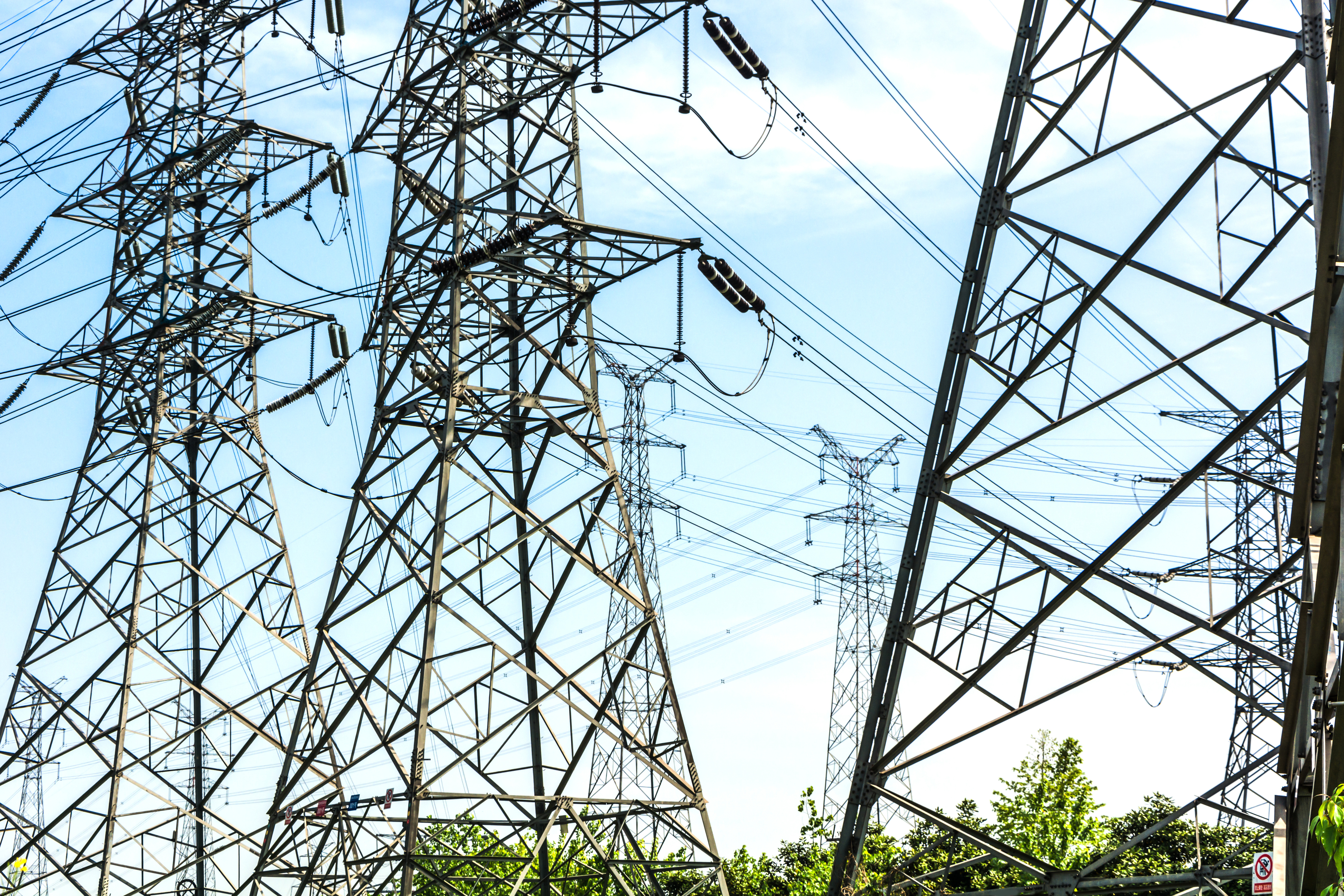
Utility Industry Outlook 2026: Navigating Demand, Reliability, and Digital Transformation
Each January, I like to look back at my editor’s notes and predictions from the year before to see what actually materialized and what quietly fizzled out. Last year, I didn’t go too far out on a limb when forecasting the top utility trends for 2025. For the most part, those expectations held true, although, in classic utility fashion, the industry didn’t move quite as fast as I anticipated.
That said, it is still moving faster than at any point since electricity was first commercialized. As I mentioned on numerous podcasts I hosted or appeared on this year, it remains an exciting and demanding time to be part of the power business. For this month’s Viewpoint, I want to briefly revisit last year’s predictions and then turn to what industry experts are collectively signaling for 2026.
My
top prediction in January 2025
was that AI, particularly generative AI, would continue to gain traction across utility operations. That largely proved true. Most utilities now view AI as a strategic priority, and 42% plan targeted AI deployments over the next two years, according to the National Grid Partners Utility Innovation Survey released in October. Many utilities spent 2025 experimenting with or piloting AI applications for predictive maintenance, load forecasting, outage management, and customer analytics.
T&D World
covered several of these initiatives, including Southern California Edison’s use of AI for fault detection.
My second prediction was that utilities would get creative in addressing the rapid growth of data centers. Load growth dominated industry conversations throughout the year, but how utilities will ultimately meet that demand remains an open question. Much of the required generation and transmission buildout is still in planning, regulatory review, or early construction. However, we did see early creativity emerge through rate structure proposals, cost-sharing mechanisms, and regulatory discussions. This topic also reached the broader public, as consumer media increasingly focused on rising electricity prices.
My final 2025 prediction was that utilities would continue pursuing “intelligent” undergrounding, a trend that steadily advanced throughout the year. California continues to lead due to wildfire mitigation needs, with
PG&E energizing approximately 1,000 miles
of underground powerlines in 2025 alone.
For 2026, I approached predictions a bit differently. Over the past year, I received a steady stream of forecasts — from analyst reports to expert commentary — offering views on where the industry is headed. I reviewed and compared several of these perspectives to see where consensus exists and where opinions diverge. While the overarching themes were not surprising, differences in priorities and solutions were telling.
Across nearly all sources, several shared predictions stood out.
1. Demand growth will strain the grid.
Every expert I heard from frames 2026 as a tipping point driven by
AI and hyperscale data centers
, electrification across transportation, buildings, and industry, and the accelerated retirement of legacy generation. There is broad agreement that this is no longer a future concern. Utilities are already operating in what many described as a “decade of demand arriving all at once,” with planning timelines shrinking from years to months.
2. Reliability and resilience will dominate decision-making.
Whether viewed through the lens of wildfire risk, extreme weather, cyber threats, or supply chain constraints, reliability has become the industry’s primary organizing principle. Key focus areas include grid hardening, risk-averse operations, targeted wildfire mitigation instead of blanket shutoffs, faster restoration, and predictive outage management. At the same time, utilities face mounting pressure from ratepayers as reliability expectations rise. Firms including West Monroe, Oracle, AspenTech, and Itron converge on a central idea: utilities will be judged first on whether the lights stay on — not solely on decarbonization progress.
3. Digital grid technologies will scale rapidly.
Nearly every forecast emphasized the need for real-time situational awareness, accurate and continuously updated network models, and advanced controls such as DERMS, REMS, VPPs, and AI-enabled control rooms. There is growing consensus that software, analytics, and data governance are now as mission-critical as physical infrastructure, with cybersecurity implications closely following.
4. Utilities must operate faster.
Experts repeatedly cited compressed planning and execution cycles, accelerated interconnection and permitting, and speed-to-market becoming a competitive advantage. Achieving this speed is not just about deploying technology; it requires organizational change, cross-functional collaboration, and new operating models — an evolution many utilities began grappling with in 2025.
Where predictions diverged was in
how
utilities should meet rising demand. Some experts emphasized an infrastructure-first approach, pointing to the need for new transmission, domestic transformer manufacturing, and large-scale generation. Others argued that grid optimization — through grid-enhancing technologies, storage, advanced controls, and DERs or VPPs — could deliver relief faster.
Generation remains a particularly contentious topic. Davidson and Fourth Power pointed to renewables paired with storage as the fastest and most cost-effective path to meeting demand. More cautious voices acknowledged nuclear’s political momentum but framed it as a longer-term solution. Others focused less on generation type and more on operability, flexibility, and market participation.
Despite these differences, the core message is clear: 2026 will not be about incremental change. It will test whether utilities can adapt fast enough without sacrificing reliability, affordability, or public trust. Supply chain constraints, workforce challenges, and the need for collaboration and partnerships will remain unavoidable realities.
Still, I remain optimistic. Having spent long enough in this industry, I have deep confidence in its ability to navigate complexity, adapt under pressure, and deliver when it matters most.
Editor’s Note: Thank you to the following companies and individuals for contributing their perspectives: Oracle; West Monroe; Emerson VP of AspenTech Digital Grid Management Sally Jacquemin; Switched Source CEO Charles Murray; Aligned Climate Capital CEO Peter Davidson; Fourth Power CEO Arvin Ganesan; Itron Distributed Energy Management Director of Product Nick Tumilowicz; and ProcureAbility CEO Conrad Snover. Visit tdworld.com for more in-depth trend coverage from our contributors.
0
Recent CommentsRelated News You might want to check out
View by
Real-Time Grid Automation Vs. Power Interruptions
T&D World
21 January 2026
electrical
Proposed Expansion of Upper Midwest Transmission Line Seeks to Address Growing Electricity Demand
T&D World
21 January 2026
electrical
Warm Homes Plan puts solar and batteries at centre of £15bn home upgrade push
Electrical Review
21 January 2026
electrical
Rolls-Royce SMR appoints Amentum as delivery partner for first UK and Czech projects
Electrical Review
21 January 2026
electrical
Dominion Secures OK to Restart Work on Coastal Virginia Offshore Wind
T&D World
21 January 2026
electrical
UNSW researchers achieve world-record efficiency for emerging antimony chalcogenide solar cells
Electrical Connection
20 January 2026
electrical
Queensland builder says migration delays are worsening the construction skills shortage
Electrical Connection
20 January 2026
electrical
Innagreen enters UK market with Dunbeg South wind farm deal
Electrical Review
20 January 2026
electrical
Utility Industry Outlook 2026: Navigating Demand, Reliability, and Digital Transformation
T&D World
20 January 2026
electrical
Energy Safe Victoria warns complacency is driving lithium-ion battery fires as new year routines set in
Electrical Connection
20 January 2026
electrical
Duke Energy Announces Operations of $100 Million 50 MW, Four-Hour BESS at its Former Allen Coal Plant on Lake Wylie
T&D World
20 January 2026
electrical
Governor of Hawaii, Josh Green Appoints Jon Itomura as Chair of the Hawaii Public Utilities Commission
T&D World
20 January 2026
electrical