powerplant
Shaping Renewable Construction
By Eco Generation•February 25, 2026•5 min read
Eco Generation•February 25, 2026•5 min read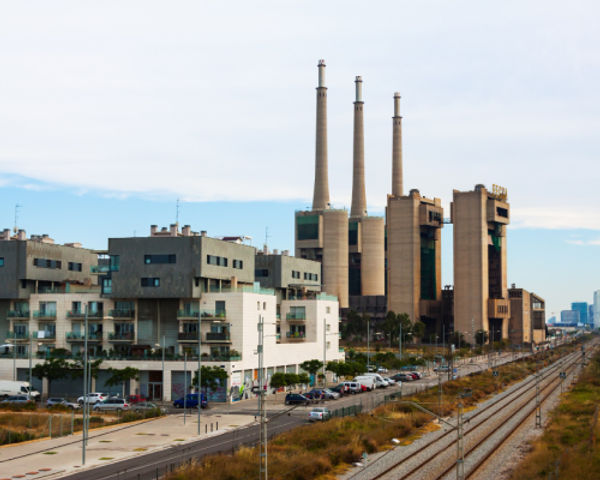
JWA Composite Matting shares why track-out control is becoming a quiet emissions lever on Australia’s renewable sites.
In Australia’s renewable energy boom, success is usually measured in megawatts and connection dates. But some of the most consequential decisions on project performance, emissions and community acceptance are increasingly being made at a far more mundane interface: Where construction vehicles leave site and meet the public road.
Mud, sediment and debris tracked off site are often treated as a housekeeping issue. In reality, poor track-out control quickly multiplies into safety risks, strained relationships with councils and landholders, repeated clean-up works and additional vehicle movements – all carrying a carbon and cost penalty.
As renewable construction pushes deeper into agricultural and regional areas, developers are paying closer attention to how sites manage the boundary between worksites and public roads. This is the problem space Australian construction-interface specialist JWA operates in, supplying and deploying practical, reusable systems that control debris, sediment and contamination. All while reducing disruption, environmental impact and compliance risk across complex construction programs.
A small interface, outsized consequences
Every large construction site has at least one critical transition point between unsealed ground and sealed public roads. On solar, wind and transmission projects, these access points are used intensively over long periods and in highly variable conditions.
Traditional controls include crushed rock pads, rumble grids and wheel-wash stations. Each can work, but all come with trade-offs.
“Crushed rock must be imported, maintained and eventually removed – and often becomes part of the problem it is meant to solve. Rumble grids lose effectiveness as debris accumulates and can require intrusive maintenance. Wheel-wash stations are effective, but add water, power, infrastructure and operational complexity,” says Min Chua, Development Manager at JWA.
“The issue is not whether these systems work on day one, but whether they can be kept working consistently over the life of a long construction program.”
Designed for evolving sites
In response, JWA has been supplying Foreign Object Debris Systems (FODS) to Australian infrastructure and renewable projects as a different class of solution.
Rather than relying solely on vibration or water, these modular systems create a controlled surface that gently shakes and spreads tyre treads, loosening and capturing debris before it migrates offsite. The system stays in place and is cleaned when required, rather than being rebuilt or replaced.
“This changes the operating model. Where rock pads wear down and need replacement, and steel grids are hard to move or require shutdowns, FODS can be cleaned in situ. Over long construction programs, that difference reduces disruption, material use and repeated intervention,” Chua says.
Large renewable projects change shape as they are built. Compounds move, haul roads shift and access points evolve.
“JWA’s systems are surface-installed and relocatable, making them suited to sites where excavation, permanent works or buried services make traditional solutions impractical. Instead of the project adapting to the control measure, the control measure can move with the project,” Chua says.
This also reduces reliance on repeated deliveries and removal of temporary materials, supporting lower-impact construction practices.
At the Goorambat Solar Farm in Victoria, eight JWA-supplied FODS units were used during construction by Bouygues.
While no formal study was undertaken, site teams found the system needed regular cleaning during wet conditions. But crucially, this could be done in place, without closing the access road or removing the system.
“A wheel-wash station had been considered, but would have required additional mobilisation, infrastructure and oversight. In this case, the FODS solution offered a lower-intervention, lower-complexity option at the site boundary,” Chua says.
The hidden emissions cost
From a sustainability perspective, track-out control is rarely discussed in carbon terms. Yet the indirect impacts are real.
Poor control leads to:
Individually these impacts are small. Across large projects and long construction programs, they accumulate into a meaningful, and largely invisible, emissions and cost burden.
This is where JWA argues the focus should shift from cleaning up failures to reducing the frequency of intervention altogether.
Track-out is typically addressed in a project’s Environmental Management Plan and Erosion and Sediment Control Plan, with access points identified as high-risk areas for sediment migration. Systems such as FODS function as engineered, maintainable controls that support ongoing compliance without repeated rebuilds or shutdowns.
Beyond single-use infrastructure
There is also a materials dimension.
“JWA’s systems are designed for long service lives, incorporate recycled content, and are fully recyclable at end of life. Rather than being consumed by a single project, they can be deployed, recovered and reused across multiple sites over many years,” Chua says.
As the sector increasingly focuses on scope three emissions and construction impacts, this shift away from disposable temporary works is becoming more relevant.
No system eliminates mud entirely. The value lies in predictability and control. Being able to restore performance quickly, without disrupting access or importing new material, reduces risk, cost and operational friction – particularly on sites operating to tight schedules or in sensitive locations.
The renewables sector has made notable progress reducing the operational emissions of generation. The next layer of improvement lies in construction practice – the interface where sites meet roads, farms and communities.
Track-out control sits at the intersection of safety, biosecurity, compliance, emissions and social licence. It is not glamorous, but it is increasingly consequential.
And as companies like JWA are demonstrating, in a maturing renewables market, how projects are built is becoming just as important as what they produce.
This article was featured in ecogeneration magazine (February 2026 edition).
0
Recent CommentsPower Plant Related News You might want to check out
View by
powerplant
25 February 2026By Eco Generation
Eco Generation5 min read
Shaping Renewable Construction
powerplant
25 February 2026ByEco Generation
Eco Generation2 min read
Solar & Storage Live Queensland Kicks Off In March 2026
powerplant
25 February 2026By Biomass Magazine
Biomass Magazine2 min read
Abc: Investment In New Us Biogas Systems Exceeds $2 Billion In 2025
powerplant
25 February 2026By Solar Quarter
Solar Quarter3 min read
Gamechange Energy Technologies Acquires Ebos Division From Terrasmart, Expanding Fully Integrated Module-To-Grid Solar Solutions
powerplant
25 February 2026BySolar Quarter
Solar Quarter3 min read
Acwa Signs 5 Gw Renewable Energy Deal With Türkiye, Starting With 2 Gw Solar In Sivas And Taşeli, Building On 927 Mw Kırıkkale Project...
powerplant
25 February 2026BySolar Quarter
Solar Quarter2 min read
Concord New Energy Warns Of Over 80% Profit Drop Amid China Renewable Sector Challenges