railwayrailway
Poland Announces First Tender For High-Speed Trains
By Railway Pro•01-13-2026January 13, 2026•6 min
Railway Pro•01-13-2026January 13, 2026•6 min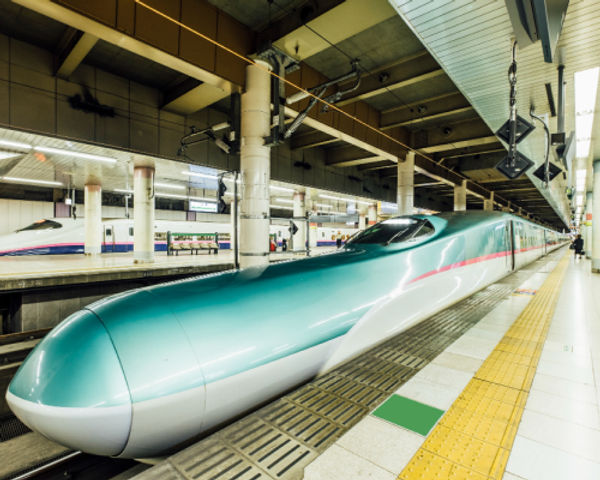 railway
Polish operator PKP Intercity has launched a tender for the purchase of 20 high-speed trains capable of speeds of up to 320 km/h, the first such tender in Poland.
The tender also includes an option for a further 35 high-speed trains, along with the provision of maintenance services and the construction of a facility for the technical maintenance of the new rolling stock.
One of the conditions for participation in the tender is the requirement to have experience in delivering trains with a speed of at least 250 km/h. Prior to launching the procedure, as part of a market analysis phase, PKP Intercity held discussions with nine rolling stock manufacturers, including Polish manufacturers, who confirmed their intention to participate in the tender in consortia with partners who have the necessary experience.
As a result of the dialogues, the timetable for the procedure was set by PKP Intercity in such a way that manufacturers have a real opportunity to prepare the best solutions and form consortia. The deadline for submitting applications for qualification to participate in the tender is the end of April 2026. This stage has been extended compared to previous procedures for the procurement of new rolling stock.
Thus, the submission of bids is planned for May 2027, and the award of the contract is scheduled for August 2027.
According to PKP Intercity, the new trains will be adapted for speeds of up to 320 km/h, and the length of a single train will be approximately 200 meters. With passenger comfort in mind, there will be two classes of travel, bar or restaurant areas, solutions for people with disabilities, and facilities for families with children.
Additional innovations that can further increase the functionality and comfort of travel will also be discussed during the competitive dialogue.
Domestically, the trains included in the firm order will be introduced on the new “Y” line, which will be designed for speeds of over 320 km/h. The line will connect Warsaw, Łódź, and Wrocław, with hourly service, as well as Warsaw, Poznań, and Szczecin, with service every two hours. The new trains will also run every two hours on the connection between Warsaw and Berlin via Łódź and Poznań.
The additional order for 35 more vehicles will allow for increased frequency on the Warsaw – Łódź – Poznań – Szczecin and Warsaw – Łódź – Poznań – Berlin routes (with hourly services) and on the Warsaw – Łódź – Wrocław route, with services estimated to run every half hour.
Also domestically, PKP Intercity anticipates that the new trains may also enter service on a new line on the Warsaw – Płock – Grudziądz – Gdańsk – Gdynia route, which could strengthen the offer of fast connections between Warsaw and the Trójmiasto area on new infrastructure.
In addition, high-speed trains will have to obtain approval to operate not only in Poland, but also in Germany, the Czech Republic, and Austria.
The above-mentioned routes will form the “Y” line, which, once developed, will enable fast travel on trains running at over 350 km/h to major European cities. This includes not only the connection to Berlin, but also those between Warsaw and Prague and Warsaw – Leipzig, via Łódź and Wrocław.
It should be noted that in October, PKP Intercity began testing a Pendolino train to run on the Czech rail network as part of a broader project to assess the interoperability of rolling stock. The results are expected to ensure the uninterrupted movement of high-speed trains between the two countries, which have different national systems.
This line is part of the ambitious CPK project, which aims to build high-speed lines with a total length of 1,790 km consisting of 12 routes and to modernize and adapt other lines to provide fast connections between major cities and Warsaw. Within the program, the “Y” line is the main component forming the Warsaw – Łódź – Poznań – Wrocław route, which will also involve a 4.6 km tunnel in Łódź. The Warsaw-Łódź section will be the first to become operational, scheduled for 2032, when the new airport (CPK Airport) will also be launched. The “Y” line will be 480 km long and will be fully operational by 2035, thus contributing to the “Poland in 100 minutes” program.
One of the most important tenders included the purchase of 42 electric multiple units, for which it signed a EUR 1.6 billion contract with Alstom, which includes an option for 30 more multiple units. This tender is considered by PKP Intercity to be historic, as it is the largest tender ever launched for new trains. These trains will also be adapted to operate in the Czech Republic.
In addition, the operator is modernizing its fleet to introduce more and more units capable of operating at speeds of over 200 km/h. For example, in July, the operator introduced the EIC Jantar train consisting of carriages and a Griffin locomotive (manufactured by Newag) and the EIC Posejdon train. These marked an important milestone for PKP Intercity, as they were the first conventional locomotive-hauled trains to reach 200 km/h in regular service. Both trains, which also include restaurant cars, were put into service on the Warsaw-Gdańsk corridor, which was initially served by Pendolino trains – Poland’s only high-speed trains, put into operation in 2014.
PKP Intercity is investing heavily in renewing its rolling stock, announcing in 2024 that contracts worth almost 4 billion EUR had been signed and were underway with domestic manufacturers. In April 2025, the company announced that it had taken delivery of 148 carriages and 29 Griffin EU160 series electric locomotives and had completed three of seven rolling stock investment projects.
European funds play an essential role in the implementation of these projects. PKP Intericity received European funding of over 1.25 billion EUR for new and modernized rolling stock. The total value of projects implemented with European funds exceeds 2.6 billion EUR under the operational programs for the periods 2007-2014 and 2014-2020. In 2024, it also signed a EUR500 million financing contract through the National Recovery and Resilience Plan (KPO) for the purchase of 57 locomotives and the modernization of existing carriages for interregional routes.
Along with the purchase of new trains, carriages, and locomotives, PKP Intercity is modernizing its existing fleet and has also planned investments of over EUR 765.5 million for the modernization and adaptation of facilities serving the rolling stock fleet.
Recent Comments
0
Loading related news…