water
Zhengzhou’S Sewage Shift To Green And Low-Carbon Development
 The Source MagJan 28, 202610 min
With China focusing increasingly on the value of recycled water, Yunfei Tan highlights an innovative sewage treatment model that is tackling water scarcity, reducing carbon emissions and improving the environment.
China has the largest total water consumption in the world, yet its per capita water resource availability is only 35% of the global average. Take Zhengzhou, a city in central China, as an example. Located in the middle and lower reaches of the Yellow River, it is the core area of Chinese and Yellow River civilisation. This metropolis, with a population of 13 million, relies on the Yellow River basin but has a per capita water resource of only 97.6 m3, less than one-twentieth of China’s average, and thus faces a significant water shortage problem.
Against this backdrop, the value of recycled water is increasingly highlighted. With dual attributes of ‘resource’ and ‘energy’, recycled water can not only alleviate water scarcity but also contribute to carbon reduction through energy recovery, which makes it the ‘second water source’ for urban sustainable development. Therefore, establishing a development path of ‘Water-Energy Nexus and Resource Recycling’ for sewage treatment plants has become a key approach to solving China’s water and energy dilemmas, promoting green and low-carbon development.
Forward looking concept and design
At present, the goal of the sewage treatment plants in Zhengzhou is shifting from mere compliance with discharge standards to resource recycling, energy acquisition, and the achievement of green and low-carbon development. The treatment of all sewage and sludge in Zhengzhou has been undertaken by Zhongyuan Environmental Protection (Zhongyuan EP). In recent years, Zhongyuan EP has set a clear goal, which is to transform traditional sewage treatment plants into ‘green’ factories. To integrate the upstream and downstream industries both inside and outside of the plant and to enable resources and energy to be shared, the project focuses on three major tasks:
– Resource recycling: Converting sewage into reusable water resources and reutilising biomass from the sludge;
– Energy production: Finding ways to transform waste into usable energy (such as biogas and combustible gas);
– Carbon emission reduction: Striving to minimise impacts on the climate from treatment processes.
To accomplish these tasks, the Zhengzhou New District Sewage Treatment Plant (STP) was established, becoming a flagship project and an innovative example of Zhongyuan EP implementing concepts of green development.
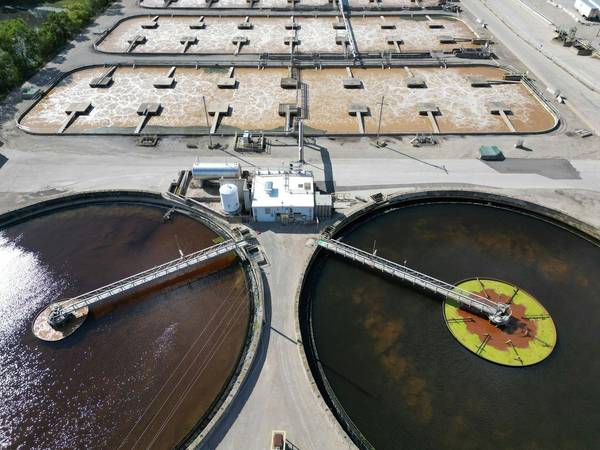
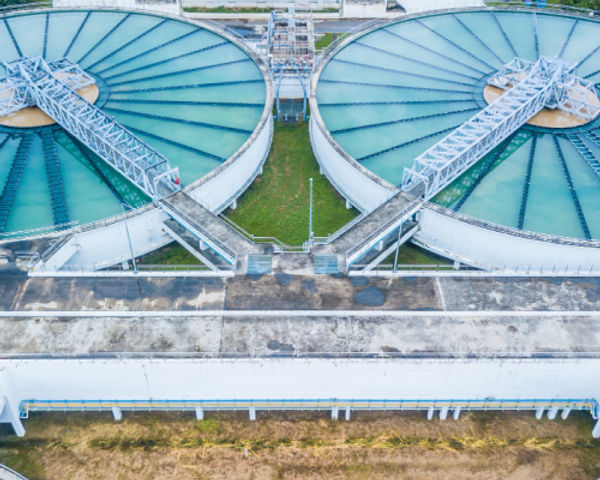
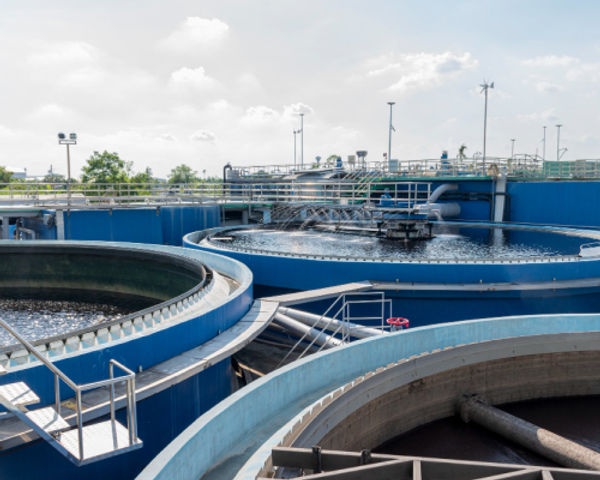
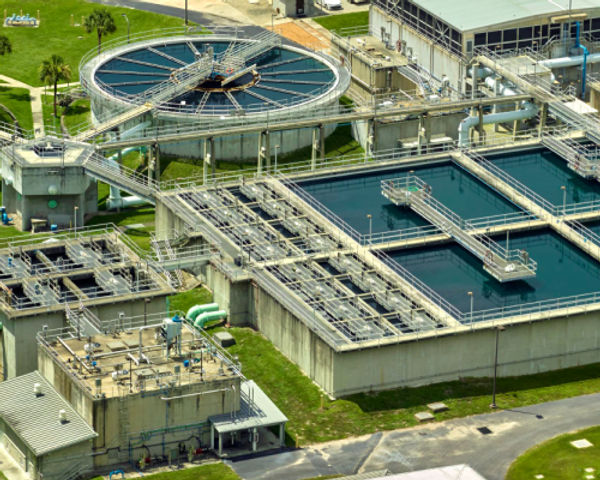
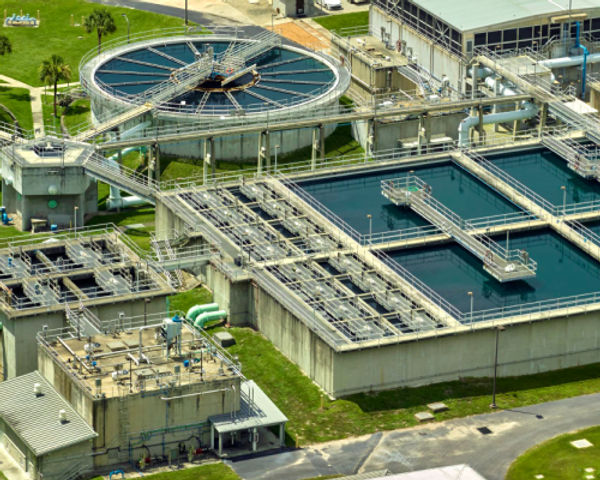
As the largest and most fully-functional STP in Henan Province and the Huai River Basin, it offers sewage treatment for an area of 328 km2 in Zhengzhou and can handle the sewage from a population of 3.89 million. The first plant in China to achieve treated water reaching Class III surface water quality, it features a daily treatment capacity of 1 million tons of sewage. The treated water is so clean (main indicators: COD≤20 mg/L, NH₃-N≤1.0 mg/L, TP≤0.2 mg/L) that it is safe for swimming and fish farming, and after further advanced treatment, it can even serve as a source for drinking water.
The STP has a treatment capacity of 1300 tons of sludge per day (with a moisture content of 80%) and can produce 1 million tons of high-quality reclaimed water per day. As the largest sludge pyrolysis and gasification project in China (with a treatment capacity of 1000 tons per day), it has introduced equipment which can minimise sludge volumes while extracting useful energy (such as combustible gas and thermal energy). And by adopting a ‘reclaimed water + clean energy’ model, it can extract thermal energy from the reclaimed water to provide heating and cooling to nearby areas. (China’s use of thermal energy in wastewater treatment is continued in a feature on p30) .
Development history
The Zhengzhou New District STP commenced construction in 2014 and was officially put into operation in 2016, undertaking approximately 40% of Zhengzhou’s sewage treatment tasks. Since 2021, under the national strategies of ‘carbon peaking and carbon neutrality,’ the plant has actively advanced a low-carbon transformation, building a modern sewage treatment platform that integrates pollution reduction and carbon mitigation, resource recycling, and energy synergy. As a ground-breaking project, the Zhengzhou New District STP has been awarded the ‘National Quality Engineering Award’ – one of the highest accolades in China’s engineering field – and has also been selected as one of the first ‘Green and Low-Carbon Model Plants’ in China.
Focus on innovation
Zhongyuan EP places great emphasis on technological innovation. To this end, it has established a robust research and development system, which includes a national-level post-doctoral workstation, a national-level water quality testing station, and numerous provincial and municipal research and development platforms and innovation studios. Relying on these platforms, it has developed several key environmental protection technologies, including:
– Sludge-to-energy transformation technology (sludge pyrolysis and gasification);
– Sewage-to-quality reclaimed water transformation technology (activated coke-based ultra-low emission sewage treatment);
– Exhaust gas treatment technology.
These innovative technologies have earned Zhongyuan EP important scientific and technological awards, such as the Second Prize of the National Award for Science and Technology Progress.
Activated coke-based ultra-low emission technology for sewage treatment
To deeply clean sewage, a special filtering material (activated coke) is used, which can remove residual trace pollutants, toxic substances, excessive nutrients (such as COD) from the sewage, and effectively eliminate up to 90% of new pollutants like antibiotics and hormones. The water treated with this technology at Zhengzhou is very clear, with underwater visibility reaching 5-7 m in depth.
Sludge pyrolysis and gasification technology (sludge-to-energy transformation)
Sludge is processed in a high-temperature, oxygen-deficient environment to decompose the organic matter into combustible gases. The heat generated through this process is recovered and reused to drive the entire system, achieving energy self-sufficiency. The process requires several steps, including sludge receipt, drying, pelletising, pyrolysis and gasification, heat recovery, and exhaust gas purification. As an efficient, clean, and low-carbon independent sludge treatment solution, it safely and harmlessly treats sludge while minimising its volume and transforming it into combustible gas and thermal energy.
Water resource plant
The reclaimed water from the Zhengzhou New District STP has two great natural characteristics: stable and reliable water volume, and moderate water temperature (approximately 15℃ in winter and approximately 25℃ in summer). A water source heat pump is used to utilise the water temperature. Like a ‘heat transporter’, it can extract the temperature difference (usually 5℃ to 10℃) from the reclaimed water to produce either cold or hot water for cooling or heating buildings.
With the principle of ‘using heat first, then using water’, the reclaimed water remains clean after the heat is extracted for cooling and heating, and can be used as industrial cooling water or municipal cleaning water, or for replenishing park lakes or improving the ecological environment of the river. The water resource plant aims to use heat without wasting water and to reuse water without causing pollution.
Green energy
One of the largest high-speed railway stations in Asia, Zhengzhoudong railway station uses reclaimed water from the STP to provide cooling and heating for the station, with a coverage area of approximately 120,000 m2. In 2024, approximately 7.82 million tons of reclaimed water were utilised to provide an equivalent of 184,000 GJ of cooling and heating energy. Compared to traditional air-conditioning systems, the project saved 50.7% of electricity and reduced CO₂ emissions by approximately 11,000 tons per year.
In addition, reclaimed water from the STP is used to provide cooling and heating for buildings across the entire 3.66 million m2 of the Zhengzhou Financial Island. In 2024, about 8.06 million tons of reclaimed water were utilised to provide an equivalent of 166,000 GJ of cooling and heating energy. Compared to traditional air-conditioning systems, the project saved 51.4% of electricity and reduced CO₂ emissions by approximately 39,000 tons per year.
Currently, 65 km of reclaimed water pipelines are under construction to transport 1 million tons of reclaimed water per day to provide heating for over 1.5 million m2 and cooling for over 550,000 m2 in the eastern area of Zhengzhou. Once completed, the project will supply 3.424 million GJ of energy annually, meeting over 40% of renewable energy heating needs in Zhengzhou and addressing heating shortage issues in the winter and reducing CO₂ emissions by 126,000 tons per year.
These efforts support Zhongyuan EP’s core concept of converting ‘sewage and waste’ into useful energy (such as electricity and heat). Minimising the use of external energy and reducing carbon emissions, the Zhengzhou New District STP is striving to transform itself into a green energy plant.
In addition to sludge, other waste can be treated at the STP. For example, by adding 200 tons of food waste for anaerobic digestion daily, the STP can produce an additional 10,000 m3 of biogas; and by adding 30% of agricultural solid waste, such as chilli stalks, the calorific value of the combustible gas and the hydrogen content produced by pyrolysis gasification can be increased by 20% and 30% respectively.
Further developments at the STP, include the construction of a 3 MW power generation unit to produce electricity from the plant’s biogas. With the addition of food waste, it can generate approximately 37,300 m3 of biogas for power generation daily, resulting in approximately 24.09 million kilowatt-hours of electricity annually, which can meet 15% of its daily electricity needs and reduce CO₂ emissions by 15,000 tons per year. In addition, a combustible gas power generation project is also being planned.
Solar panels are another addition to the sustainable energy mix at the STP, with process tanks, rooftops, and open spaces in the plant covered with solar panels. Currently, this generates 31,000 kilowatt-hours of electricity daily, which can meet 10% of the plant’s electricity needs and reduce CO₂ emissions by 7171 tons. An additional section of solar panels is currently under construction. Once completed, this is expected to generate approximately 54,000 kilowatt-hours daily, which will meet an additional 15% of the plant’s electricity needs and reduce CO₂ emissions by 12,528 tons.
To enable energy to be stored, a 10 MW energy storage system is under construction. This system can regulate approximately 11,700 kilowatt-hours of electricity between peak and off-peak times daily. Once completed this will make the use of green electricity more flexible, stable, and reliable.
To further improve energy efficiencies, a ‘cascaded heat utilisation’ approach has been adopted at the STP, utilising the produced biogas and combustible gas to achieve heat self-sufficiency for sludge processing.
Zero carbon ambitions
In 2024, the Zhengzhou New District STP had achieved remarkable success in carbon reduction, achieving average daily carbon emissions of approximately 36 tons. With further green projects gradually coming into operation, it is expected that over 40% of the plant’s electricity will come from green energy in the future. As an example of forward looking, sustainable treatment processes, the Zhengzhou New District STP model provides a ready-made example for STPs around the world, proving that they can not only treat sewage and safeguard human and environmental health, but can also act as water resource and energy plants.
Author: Yunfei Tan is general manager at Zhongyuan Environmental Protection, Zhengzhou, China.