factoryfactory
Cellares raises $257M to expand automated cell therapy manufacturing
By Pharma Manufacturing – Facilities•01-30-2026January 30, 2026•2 min
Pharma Manufacturing – Facilities•01-30-2026January 30, 2026•2 min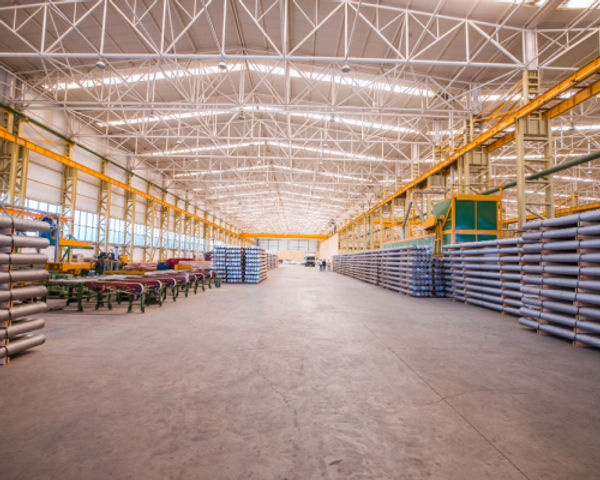 factory
Cellares, an integrated development and manufacturing organization (IDMO) for cell therapies,
. The funding brings Cellares’ total capital raised to $612 million, according to the announcement.
The company said proceeds from the Series D will be used to fund the
of automated IDMO “smart” factories in South San Francisco, Calif., Bridgewater, N.J.,
, and Kashiwa City, Japan. The facilities are intended to support commercial launch and large-scale manufacturing of cell therapies, with capacity to serve hundreds of thousands of patients annually.
Cellares expects to begin supporting clinical manufacturing in the first half of 2026, with commercial-scale manufacturing starting in 2027.
“The barrier to curing more patients is no longer scientific — it is industrial,” Cellares CEO Fabian Gerlinghaus said in a statement. “With FDA validation, global commercial demand, and the capital to scale, we are building the high-tech infrastructure required to deliver cures and life-changing treatments worldwide. This financing puts Cellares on a clear, disciplined path toward becoming a public company.”
Cellares’ IDMO model is designed to replace labor-intensive contract manufacturing with fully automated, GMP-compliant manufacturing and quality control systems suitable for clinical and commercial production, the company said. Its Cell Shuttle platform provides closed, end-to-end cell therapy manufacturing, while the Cell Q system automates in-process and release testing.
According to the company, the integrated platform can deliver up to approximately 10-fold higher throughput and lower per-patient manufacturing costs compared with conventional contract development and manufacturing organization (CDMO) facilities of similar scale. Cellares said its approach enables commercial-scale capacity with fewer facilities and a smaller workforce than traditional manufacturing models.
Cellares has automated multiple cell therapy processes and modalities across biotechnology and pharmaceutical partners, the company said. It previously entered into a $380 million
to reserve commercial-scale capacity in Europe, Japan, and the U.S. The company’s Cell Shuttle platform has also received the
, which can enable expedited regulatory review for submissions incorporating the technology.
Recent Comments
0
Loading related news…