plumbing
Dec 30, 2025
Building at the Speed of AI: How Contractors are Meeting the Demands of Data Center Construction
Key Highlights
Projects now require fast mobilization of large workforces, complex logistics, and remote site management to meet
aggressive 12-14 month delivery cycles
High-density mechanical
and electrical systems demand exceptional precision; layout mistakes can cause cascading delays across multiple trades
Connected workflows centered around a
Common Data Environment (CDE)
enable real-time updates, better coordination, and fewer rework issues
Deloitte projects that by 2035,
power needs for AI data centers in the US could surge more than thirtyfold
. The demand for computing power has turned data centers into one of the fastest-moving segments of the construction industry. To keep pace, hyperscalers and colocation developers are racing to bring new capacity to market, and in the process, tasking contractors with delivering highly complex projects within timelines once considered impossible.
One hyperscaler’s current data center strategy underscores the urgency of scaling and the constraints developers face. To keep pace with demand, the company housed servers in massive temporary structures while permanent buildings were under construction. These structures enabled the company to deploy racks of servers and start training AI models months before traditional building structures were ready.
The message is clear: compute capacity delivered early comes with a tangible market advantage, and contractors are expected to deliver.
A New Tempo on the Jobsite
For most contractors, the transition from traditional project schedules to 12- to 14-month delivery cycles necessitates a fundamental shift in planning and execution. These projects mobilize fast and grow even faster. It’s not unusual for a contractor to mobilize 150 tradespeople in the first week on a rural jobsite, ramp to 500 within the first 60 days and peak at 1,000 to 5,000 craft professionals.
Many data centers are built on large, remote parcels of land where skilled labor is limited, requiring teams to establish full operations from scratch. Temporary housing, expanded logistics planning, and tightly orchestrated material management all become part of the equation.
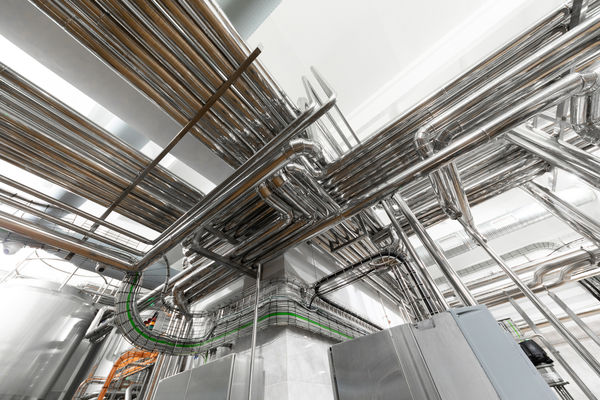
Meanwhile, the work itself is incredibly complex. Mechanical rooms are denser. Electrical systems require massive loads. Cooling infrastructure must be highly redundant. Overhead spaces are fully packed with pipe, conduit, cable tray and structural elements that leave no margin for misplacement. Against this backdrop, every decision matters and every hour lost has consequences.
Precision is Non-Negotiable
High-speed delivery does not eliminate the need for accuracy; instead, it amplifies it. A layout mistake, such as an incorrect embed location or misplaced sleeve doesn't simply cause rework; it disrupts thousands of downstream tasks across multiple trades.
In high-density mechanical and electrical environments, a single conflict can stymie progress across an entire data hall. These delays cascade quickly on projects where the schedule is already highly compressed.
As a result, contractors are placing greater emphasis on:
●
LOD 400/500 modeling that reflects field-ready conditions
●
Accurate layout and verification before installation
●
Rapid communication and collaboration when updates or design changes occur
●
Continuous alignment between fabrication, delivery and installation
The goal is straightforward and centers on eliminating surprises and keeping field work moving.
Connected Workflows Are Becoming Standard
Meeting these expectations requires more than isolated tools or standalone technology. Contractors are shifting toward connected construction workflows—digital processes that link design, fabrication, layout, field installation, and quality assurance in a shared, continuously updated environment.
At the center of this approach is the Common Data Environment (CDE). Instead of referencing a patchwork of PDFs, emails and static documents, teams work from a single living source of truth that contains models, drawings, layout data, RFIs, scans and other important information. When changes occur, they are automatically updated and accessible to everyone. The result is fewer disconnects, more predictable scheduling and tighter coordination between trades.
A CDE also allows every phase to inform the next. Design intent becomes fabrication data. Fabrication progress informs the schedule. Field scans verify conformance to the model, and installation sequencing is adjusted dynamically based on conditions captured on site. The workflow becomes circular, with each step reinforcing the accuracy of the next.
How Contractors are Using Connected Workflows
Contractors are embracing connected workflows in several key areas, each of which directly supports the speed and accuracy required for data center delivery:
Integrated, Data-Rich 3D models
Coordinated 3D models bring architectural, structural, mechanical, electrical and plumbing details together early in the process. Conflicts are resolved before the first crew mobilizes, which reduces downstream congestion and helps field teams build with certainty.
Robotic Layout and 3D Scanning
Robotic total stations and laser scanners extend model accuracy directly to the field. Layout points, anchor bolts, sleeves and embed plates can be set within tight tolerances, and scans of in-place work provide immediate confirmation that installations align with the model before the next trade arrives.
Model Driven Fabrication and Material Flow
Fabrication management software fed directly by coordinated model data allows shops to plan sequencing, perform quality checks and schedule just-in-time deliveries. When fabrication systems feed directly into the CDE, contractors gain real-time visibility into shop progress. Deliveries are scheduled based on actual field readiness, which reduces storage needs and minimizes handling on crowded sites.
Connected Field Access
With tablets and connected devices, crews in the field can access the latest drawings, model views and installation instructions on-site. Updates flow instantly across the model and into the field, allowing crews to identify and resolve any design changes quickly and keep sequences on track. Linking accurate data with coordinated processes helps teams install faster, with fewer errors.
Driving Industry Growth and Performance
Data centers have become one of the most demanding project types. The lessons learned on these projects are shaping expectations across the industry—for better coordination, greater predictability and fewer disconnects between design and the field.
Contractors who adopt connected workflows today aren't just equipped for data centers. They're building capabilities that will define competitive performance across all projects in the years ahead.
Duane Gleason is an Industry Workflow Director at Trimble with over 20 years of hands-on construction and technology experience. Starting in the field and moving through project management, BIM services, and product leadership, he now helps drive Trimble’s Connected Construction portfolio, aligning technology and workflows to improve efficiency and innovation across the industry.
0
Recent CommentsRelated News You might want to check out
View by
Duane Gleason
Contractor Magazine
30 December 2025
plumbing
Building at the Speed of AI: How Contractors are Meeting the Demands of Data Center Construction
Contractor Magazine
30 December 2025
plumbing
Reality Intelligence: The Missing Link Between Jobsite Truth and On-Time Delivery
Contractor Magazine
29 December 2025
plumbing
Rinnai Partners with Habitat for Humanity Canada to Support Affordable, Energy-Efficient Housing
ASPE Pipeline
24 December 2025
plumbing
Lemon Seed Marketing, CertainPath Launch Rebate Program for Home Service Contractors
Contractor Magazine
23 December 2025
plumbing
Taco Hydroflo Pump Solutions Lubbock Facility Earns ISO 9001-2015 Certification
ASPE Pipeline
23 December 2025
plumbing
Stainless Steel Drainage Products
PHCP PROS
22 December 2025
plumbing
Mitsubishi Electric installs heat pumps in Grade II listed building
Heating and Plumbing Monthly
22 December 2025
plumbing
Bradford White Supports Philadelphia and West Michigan Communities Through Seasonal Giving
ASPE Pipeline
22 December 2025
plumbing
Taco’s Next Generation Zone Valve Controls and Switching Relays Win CIPHEX West Award
ASPE Pipeline
19 December 2025
plumbing
AWWA Testifies Before Congress on Need for PFAS Liability Protection for Water Utilities
ASPE Pipeline
19 December 2025
plumbing
T&S Brass Midi-Reel
PHCP PROS
19 December 2025
plumbing