powerplantpowerplant
Thanks to two new laws, more Virginians can save with community solar
By Canary Media•06-02-2026June 02, 2026•7 min
Canary Media•06-02-2026June 02, 2026•7 min powerplant
When Steve Ault got an offer about six years ago to lease a bit of his 100-acre family farm in Prince Edward County, Virginia, for solar panels, he let the letter sit on the kitchen table for a few days.
Then he showed it to his wife, Chris. “Well, shoot,” she recalled telling her husband. “Let’s give them a call and see what they’ve got to say.”
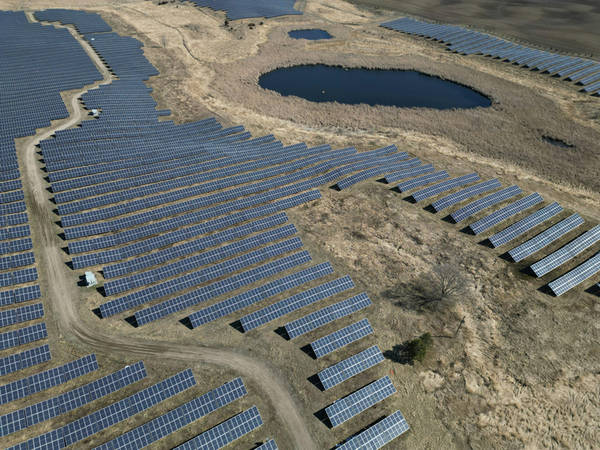
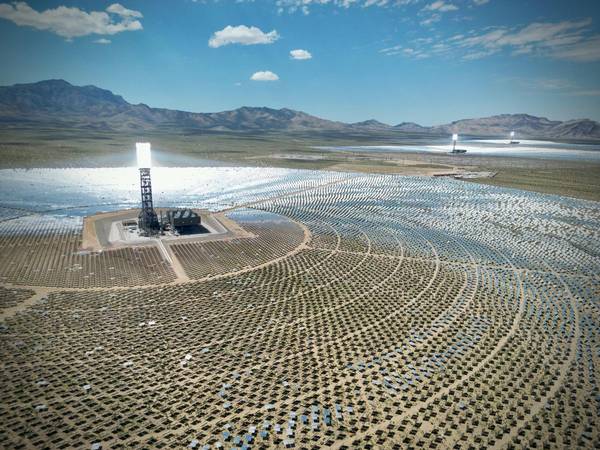
The couple ultimately agreed to rent 20 acres of their pastureland to developer Dimension Energy for a small, 5-megawatt solar array, nestled behind a nearby railroad track and far from public view. Called a “shared solar farm,” it serves customers who subscribe through their utility, Dominion Energy.
As groundbreaking neared, they took some initial flak from their neighbors in this bucolic county on the edge of Amish country, about 80 miles from Richmond.
“We saw the signs going up,” Steve said, which read “Stop the solar grab.” But now, the couple believes, some of those same neighbors are probably envious. After all, the duo, who began raising hogs, sheep, and other livestock two decades ago as a second career, have netted tens of thousands of dollars each year on the panels, which began sending power to the grid in February 2024. The funds have enabled them to retire comfortably.
“They’re going to pay three times what this farm’s worth at the end of the day,” Steve said.
The grass beneath the panels in the solar field, a stone’s throw from the couple’s renovated 19th-century farmhouse, is maintained by an area shepherd and his 50-some sheep. All in all, Steve said, the solar array “has been such a win-win.”
Now, many more farmers can take advantage of the same opportunity, thanks to a pair of laws signed this spring by Gov. Abigail Spanberger, a Democrat who has made containing energy prices a focus of her administration.
The laws require Dominion and Appalachian Power, the state’s other investor-owned utility, to develop more shared solar farms — also known as community solar — like the one on the Aults’ property. Up to 5 megawatts in size, the arrays are partially financed by subscribers who want solar energy but don’t own their homes, have shaded roofs, or otherwise aren’t in a position to invest in their own panels.
“The Spanberger administration and the state legislature realized they had to tackle affordability,” said Brandon Smithwood, Dimension Energy’s vice president of policy. With shared solar, he said, “that comes on two fronts.”
For one, subscribers can lower their bills because solar is generally cheaper, and its costs are less volatile, than electrons produced from fossil fuels. Plus, Smithwood said, small solar farms are relatively quick to develop — adding valuable capacity as prices soar in across the regional grid and data centers strain supply.
“You can tuck this in a farmer’s back 40 where it can’t be seen from a road,” Smithwood said, just as the Aults’ solar array is. “Standing up a program like this reduces both near-term and long-term energy costs that benefit all ratepayers” — even those who don’t subscribe.
Sponsored by northern Virginia Democrats Sen. Scott Surovell, the Democratic majority leader, and Del. Rip Sullivan, the two new statutes are the latest chapter on shared solar in Virginia.
In 2020, state lawmakers passed the Clean Economy Act, which required Dominion and Appalachian Power — known as APCo — to sell 100% carbon-free electricity by midcentury. That law directed Dominion to develop 200 megawatts of shared solar farms. A follow-up measure in 2024 required APCo, the smaller of the two utilities, which serves mostly southwest Virginia, to invest in 50 megawatts.
Consumers eagerly embraced the opportunity to take part in shared solar, according to the national trade group Coalition for Community Solar Access. In Dominion territory, the original 200-megawatt offering serves tens of thousands of residents across 52 projects. APCo’s version launched in 2025 and was almost immediately oversubscribed.
At the same time, dozens of renewable energy developers are waiting in the wings, ready to deploy more shared solar for both Dominion and APCo customers.
The new laws require the utilities to respond to all this interest. Under Senate Bill 254/House Bill 807, Dominion must make another 525 megawatts of shared solar available for consumers beginning this summer. Under Senate Bill 255/House Bill 809, APCo will improve its billing practices and offer up another 100 megawatts.
“This program expansion is a reflection of a new affordability politics,” Smithwood said, whereby policymakers are relying on clean energy and efficiency to lower utility bills, rather than doubling down on expensive fossil fuels.
Indeed, this year lawmakers passed, and Spanberger signed, a flurry of clean energy bills aimed at curbing costs. The measures include allowing plug-in balcony solar units, reining in local restrictions on large solar farms, and pushing for better utilization of the state’s existing network of poles and wires.
“‘Affordability’ is the word of the decade, of the year,” said Charlie Coggeshall, the mid-Atlantic regional director for Coalition for Community Solar Access. “We were grateful that community solar was recognized as part of the affordability solution.”
Data from the National Laboratory of the Rockies shows how the expansion to 875 megawatts could catapult Virginia to fifth in the country for shared solar, just behind Minnesota, which has one of the oldest such programs in the U.S.
Depending on how it’s designed, shared solar saves consumers around the country between 5% and 15% on their utility bills, while delivering millions of dollars in system-wide benefits by reducing the need for costly generation, transmission, and distribution investments.
But Virginia’s shared solar scheme has a key feature that distinguishes it from those in many leading states: Subscribers are charged a minimum monthly fee.
The concept, known as a minimum bill, is a concession by clean energy advocates, who tout the net benefits of the shared solar for all ratepayers. And in early versions of the Virginia program, the minimum was set so high that only those exempt from paying it — low-income customers — ended up subscribing.
Yet after years of debate and refinement, Coggeshall and others are hopeful that policymakers have finally set the right balance.
“The gist of it is you’re paying at least $25 or $50 on your electricity bill every month,” Coggeshall said. “It just ensures that the utility is always going to get paid: Essentially, you can’t zero out your bill.”
The lower minimum bill should invite more diverse participation among customers of all income levels.
“What’s exciting is, not only are we going to be able to serve more Virginians in terms of numbers,” Smithwood said, “but we’re going to be able to serve people of different incomes and different parts of the state.”
To wit: Dimension Energy expects the Virginia expansion to cut bills by at least 10% for another 125,000 households in the state.
Dominion and APCo will be still required to serve a set target of low-income customers. That, in addition to the economics and sustainability of solar, was a key draw for the Aults years ago.
“The energy we generate here serves low-income [households],” Chris Ault said. “I really like that.”
Elizabeth Ouzts
is a contributing reporter at Canary Media who covers North Carolina and Virginia.
Recent Comments
0
Loading related news…