railwayrailway
High-Speed Rail Enters Next Stage In Australian Journey
By Rail Express•02-13-2026February 13, 2026•8 min
Rail Express•02-13-2026February 13, 2026•8 min railway
High-speed rail has been talked about in Australia for more than three decades. Some may have dismissed the idea as a pipe dream – but in the past few years, tangible progress has been made to take it from dream to reality.
The proposed future network would involve high-speed trains running from Brisbane to Melbourne, through Sydney and Canberra, while also serving regional communities across the East Coast.
The first stage would allow passengers to travel between Newcastle and Sydney in about one hour, and from the Central Coast to either city in about 30 minutes. Travel time between Sydney and Canberra would be about 90 minutes, and it would take approximately four hours to get from Sydney to Melbourne.
But high-speed rail isn’t just about saving time for commuters and holidaymakers, as Tim Parker, Chief Executive Officer of the High Speed Rail Authority, pointed out at the AusRAIL PLUS rail industry conference in Melbourne.
“One of the first things I discovered on this project was that it’s not a rail project or a transport project,” he told the audience. “It’s a regional economic project.
“So often we get fixated on what [high-speed rail] is rather than what it does, but this is a project that will unlock more housing, create more jobs, and support the development of our regional areas.”
Parker said that in the past few years, high-speed rail has evolved from a “vague concept to a definitive plan”.
Progress has been seen in recent developments such as the Federal Government assessment body Infrastructure Australia giving the green light to the business case for the section of high-speed rail between Sydney and Newcastle.
It supported the project moving into the development phase – a two-year period to engage with contractors and firm up at least 40 per cent of the design.
In parallel, it recommended that further work and consultation progress on the entire East-Coast National High Speed Rail project, building on the analysis that was developed alongside the business case.
It also asked that the existing business case, including economic appraisal, be updated to capture the outputs of the development phase and be provided to the Federal Government, including Infrastructure Australia, to inform a final investment decision for delivery of the Newcastle to Sydney section.
“Infrastructure Australia mark the homework – they do the assurance to government on every big project,” explained Parker.
“We’re now waiting for a direction from the government, but Infrastructure Australia saying our business case passes muster is an important piece of the puzzle.”
The Newcastle to Sydney high-speed rail network is planned to run from central Newcastle through the Central Coast into Sydney CBD before heading west, with stations at Newcastle, Lake Macquarie, Central Coast, Sydney Central, Paramatta and Western Sydney Airport.
“This will provide fantastic connectivity, not just to Newcastle, but to the new asset, which is Western Sydney Airport,” said Parker.
“Passengers will be able to go from Sydney Central to Western Sydney Airport – a journey which takes just over an hour and a half by car – in 25 minutes.”
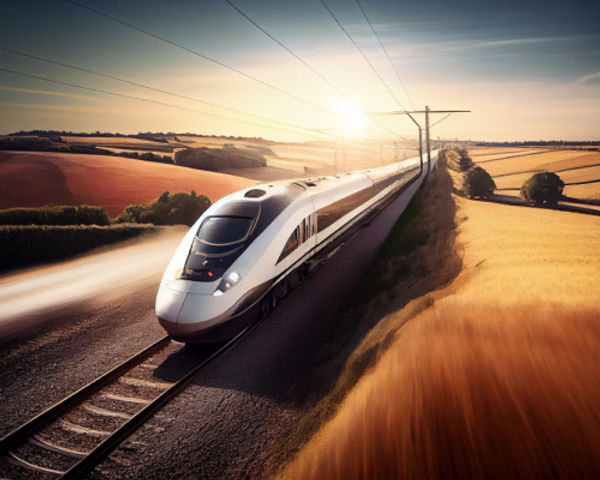
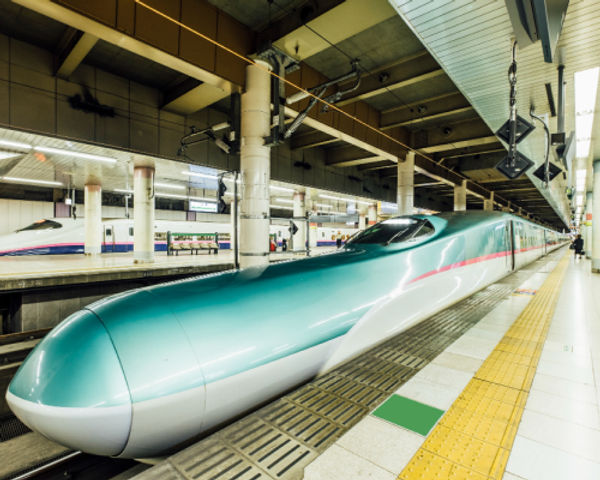
Parker said the HSRA is intending to run high-speed trains similar to those already in operation around the world, with top speeds of 320 kilometres an hour.
However, there are technical challenges associated with the Sydney to Newcastle section of the project as existing rail lines cannot be used.
“We have to build a dedicated high-speed rail line, and this will involve a lot of tunnelling,” he explained.
“The tunnelling will probably take us from Sydney Central almost as far as Central Coast.”
Another challenge is the topography of the region.
“We have water crossings, we have hills, we have valleys, and we have a very important national park, so tunnelling seems to be the most appropriate course of action,” Parker added.
The Infrastructure Australia report released in November 2025 revealed the expected tunnel diameter between Sydney and the Central Coast would prevent trains from travelling above 200 kilometres per hour in that section.
Parker said that while this might “sound slow”, it’s still about twice as fast as a Sydney Metro train.
“Also, if you’re going at 320 kilometres an hour it takes 16 kilometres to stop,” he pointed out.
“We’ve sized the tunnels not around getting the highest speed possible, but to get the speeds we need for travel times that we think are competitive with other forms of transport.”
He said that while some people would prefer the train ran direct between major cities, there are many benefits to stopping along the way.
“The economics are driven by what it does, but also how it impacts the region,” he said.
Parker listed reliability and comfort as additional benefits of travelling via high-speed rail.
“I’m not going to ask for a show of hands from the crowd to see who had a problem flying into Melbourne for AusRAIL, because I’m sure many of you would put your hands up,” he quipped to the audience during the conference.
“And of course, another great thing about trains is that you’re productive. Our trains will have high-speed wireless internet. You can grab a drink or some food during your journey. It’s a different form, but very competitive to air travel, and incredibly competitive compared to, say, driving your car.”
Parker also reckons high-speed rail will help to boost tourism in Australia.
“Overseas, the connection between high-speed rail and airlines is very strong,” he said. “You fly in somewhere and you get on a train.
“Also because when you fly into Australia, if you’re coming from Europe you’ve probably been on planes for 24 hours.
“If you then wanted to travel around Australia and see the sights, wouldn’t it be great to have an alternative to getting on another plane?”
He said high-speed rail would also play a major role in reducing Australia’s carbon emissions, with a high-speed train from Sydney to Melbourne emitting just one per cent of the carbon of a flight between the cities.
Parker said high-speed rail is a huge project that’s going to take a long time to complete.
“This is not a project that will be delivered in a few years,” he said. “It’s a multi-generational project.
“We’ve got quite good at delivering mega projects in Melbourne, Sydney and Brisbane, but the most challenging part is delivering those projects on time and on budget.
“Often, people are really keen to put a shovel in the ground, but my view is that you should know where to put that shovel first.”
He emphasised that the development phase for the high-speed rail project doesn’t just mean more studies. “It’s actually starting the procurement of a number of the major packages,” he said. “But more importantly, it’s reducing risk by getting planning approval and making sure we get the land we need to actually do the construction.
“The result is that once the development period is over, you’ve got increased certainty on costs and timeline, making a decision from the government much easier to make.”
Parker said the HSRA wants to embrace innovation without being on the “bleeding edge” of technology.
“We want to take advantage of the technology that exists and is being developed in Australia and internationally, working with industry to co-develop the right product.
“We want to continue to be open to new ideas, while taking on board lessons from high-speed rail in Europe and Asia.
“Communities and stakeholders will be key to everything we do, and sustainability and net zero, both in construction and operation, has got to be a key consideration.”
After awarding advisor contracts, the HSRA will hold an industry briefing and then invite expressions of interest for a number of major packages.
Parker said the HSRA is prioritising early contractor involvement for a more effective approach, offering more opportunities to refine the project’s design over time.
The HSRA is looking for at least two but no more than three entities per package.
After the Expression of Interest process is complete, Parker said the HSRA will run a competitive Early Contractor Involvement process before awarding an incentivised target cost contract.
Another early package will be the design, build and operation of an advanced manufacturing facility.
“What we’d like to get in the end is a kit of parts for high-speed rail, where they’re manufactured, taken to site and assembled, rather than constructing on site,” he said.
Looking ahead, Parker said 2026 is going to be one of the HSRA’s busiest years yet.
“The pre-development phase is close to being finalised, and the timing of the development phase is subject to approval from government.
“It’s their prerogative, but we’re not going to rush things. We’ve spent the last few months getting ready, so once we get a direction from the government, we can move quickly.
“It’s the next stage of a very exciting journey for high-speed rail.”
Recent Comments
0
Loading related news…