road & bridge
Tech Profile: Building Resilient Transportation Infrastructure For A Changing World
By Traffic Technology Today•February 26, 2026•3 min read
Traffic Technology Today•February 26, 2026•3 min read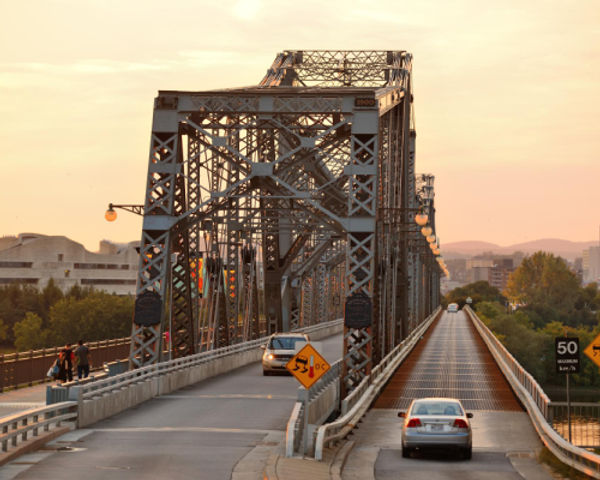
Transportation systems are the backbone of modern economies, connecting people, goods, and services across cities, regions, and continents. But today, these systems face unprecedented challenges. From the escalating impacts of climate change to aging infrastructure and geopolitical disruptions, the global transportation network must evolve to remain reliable and resilient.
“Smart planning and the right tools on-site are essential to create a resilient network and prevent local failures, which often trigger widespread delays and economic fallout,” says Christian U. Haas, CEO, Umovity, the joint brand for PTV Group and Econolite.
Flooding, wildfires, and other climate-related disasters pose an increasing threat to transportation systems. What happens when a major roadway is shut down? How can traffic be rerouted efficiently in an emergency? Where are the weak points in a city’s mobility network?
Transport modeling software provides vital answers to these questions. Macroscopic planning tools like PTV Visum enable cities to simulate traffic demand and network performance under various scenarios. This allows for a comprehensive understanding of where vulnerabilities lie and how disruptions can cascade through the system. Decision-makers can explore “what-if” scenarios – from floods and fires to infrastructure failures – and prioritize investments in resilient infrastructure like elevated roads or green corridors.
At a more granular level, microscopic simulation tools such as PTV Vissim allow planners to assess specific intersections, road segments, and evacuation routes. These tools help predict and optimize road capacity under stress conditions, ensuring safer and more effective responses during emergencies.
While long-term planning is critical, real-time situational awareness is equally essential. Traffic disruptions rarely follow a script, and swift, informed action can mean the difference between a manageable incident and a citywide crisis.
Solutions like PTV Flows offer real-time monitoring and prediction of road traffic using AI-driven algorithms and machine learning. With automatic alerts and predictive analytics, traffic operators can detect congestion early and act quickly to mitigate problems before they escalate.
Meanwhile, intelligent traffic management systems such as Econolite’s Centracs Mobility respond dynamically to changing conditions, optimizing signal control. These systems can maximize signal timingperformance in real time, rerouting traffic away from danger zones – whether due to flooding, power outages, or heatwaves—thereby improving safety and emergency response times.
Integration with other smart city systems – like weather sensors, flood warnings, and emergency and public transit CAD/AVL systems – enables cities to coordinate across departments and act with precision when disruptions occur.
Digital solutions are only as effective as the physical infrastructure supporting them. Resilient systems require durable, weather-resistant hardware that performs consistently in extreme conditions. That’s why Econolit’s cabinets, sensors, and radar units are designed to operate under high temperatures, humidity, and exposure to water or debris.
“Our portfolio at Umovity forms a robust, adaptive traffic management system that provides real-time situational awareness during climate events,” Haas explains. “With our solutions, cities can reduce downtime and accelerate recovery after disruptions – while gaining the data-driven insights necessary for long-term infrastructure planning and climate adaptation.”
Image courtesy of PTV Group
0
Recent CommentsLoading related news…