stadium
Manfred, Desantis Support Rays Stadium, Funding Questions Persist
By Front Office Sports•February 05, 2026•3 min read
Front Office Sports•February 05, 2026•3 min read
There is a groundswell of additional support behind the Rays’ revised plans to build a ballpark in Hillsborough County, Fla., but as has been the case for much of the past 20 years, there are still plenty of unanswered questions about funding.
Two weeks after the MLB club entered a memorandum of understanding to build a stadium and mixed-use development at Hillsborough County’s John Mabry Campus, league commissioner Rob Manfred and Florida Gov. Ron DeSantis both praised the emerging plan from club owner Patrick Zalupski and his partners.
“Baseball belongs in Tampa Bay. Baseball can succeed in Tampa Bay,” said DeSantis, appearing in a joint press conference with Manfred.
That alone is a noteworthy sentiment, as that’s not been a given for the Rays under prior owner Stu Sternberg, who spent many years in a fruitless pursuit to develop a successor facility to Tropicana Field. When a $1.3 billion deal with St. Petersburg, Fla., and Pinellas County finally happened in 2024, Sternberg walked away from it eight months later and sold the team soon thereafter. This was also the first time that a Florida governor made such an overt sign of support for a new Rays ballpark.
The latest deal with the Zalupski group is situated on the eastern side of Tampa Bay, near Raymond James Stadium and Tampa International Airport. While Manfred hesitated to say “it’s this or never,” he did express both confidence and urgency surrounding the club’s latest plan.
“I do think we’re at a point in the history of the club that something needs to get done,” he said.
A rough plan toward funding a new Rays ballpark began to take shape Wednesday as the Hillsborough County Commission unanimously approved a motion to discuss a “framework” for a stadium deal.
That vote was based on a rather loose structure in which the Rays would pay for half of a $2.3 billion stadium, plus cost overruns and maintenance, with the other half coming from the county and City of Tampa. The surrounding mixed-use development, projected at $8 billion to $10 billion, would be privately funded.
There is still a long way to go toward anything resembling a final deal, though. The document that the county commission approved only details potential funding sources for the public-sector contribution, such as hotel taxes and funds from an existing community investment tax (CIT). Any such mechanism will still need to be finalized, either legislatively or by going directly to taxpayers for a vote.
As that happens, though, both sides are proceeding on a mentality of trust-but-verify as talks continue.
“We are not taking the team’s word on the economic impact of the ballpark and ancillary development,” said Hillsborough County commissioner Ken Hagan. “We are independently verifying their projections.”
The Rays, meanwhile, are one of nine MLB clubs that have severed ties with the embattled Main Street Sports Group. The local broadcasting plans for the 2026 season have not been finalized, but it’s certainly possible that the Rays will fold into the MLB Media in-house plan for game production and distribution, a model now used by 12 other clubs.
0
Recent CommentsStadium Related News You might want to check out
View by
Manfred, Desantis Support Rays Stadium, Funding Questions Persist
Front Office Sports
05 February 2026
stadium
Fund Backing Women’S Sports Raises $250M And Counting
Front Office Sports
04 February 2026
stadium
Rybakina Defends Once-Banned Coach After Australian Open Win
Front Office Sports
03 February 2026
stadium
Nfl, Espn Finalize Landmark Deal After Federal Approval
Front Office Sports
02 February 2026
stadium

Kansas City Chiefs Down To Final Two For New Stadium Design
Stadia Magazine
30 January 2026
stadium
$450M Plan Unveiled For David Booth Kansas Memorial Stadium Redevelopment
Stadia Magazine
30 January 2026
stadium

New Sydney Arena Proposal Moves Forward With Two Bidders Revealed
Austadiums
30 January 2026
stadium
Red Open-Air Ramps Weave Around Sordo Madaleno'S Fifa 2030 Stadium In Gijón, Spain
Design Boom- Stadium
29 January 2026
stadium
Just Before Completion, Real Madrid'S Stadium Unveils Revamped Metallic Facade
Design Boom- Stadium
29 January 2026
stadium
Geometric Facade Wraps Stadium By Wta Design Studio, Reflecting Traditional Ilocano Fabric
Design Boom- Stadium
29 January 2026
stadium
Ch+K Reveals Construction Updates Of Its Multipurpose Arena In Jihlava, Czech Republic
Design Boom- Stadium
29 January 2026
stadium
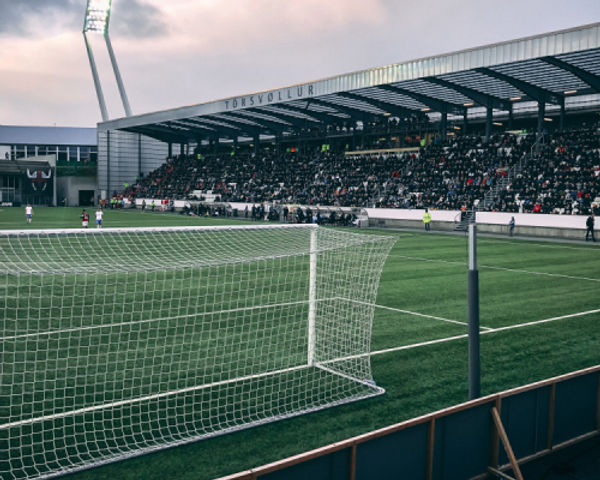
Cvc’S New Sports Business Buys Into $300M Equestrian Company
Front Office Sports
29 January 2026
stadium
Sky Stadium Enters New Naming Rights Era With Hnry Partnership
Austadiums
29 January 2026
stadium

Populous Named Finalist For Lead Designer Of New Kansas City Chiefs Stadium
Populous
28 January 2026
stadium
China’S Anta Eyes World Domination With $1.8B Puma Deal
Front Office Sports
28 January 2026
stadium
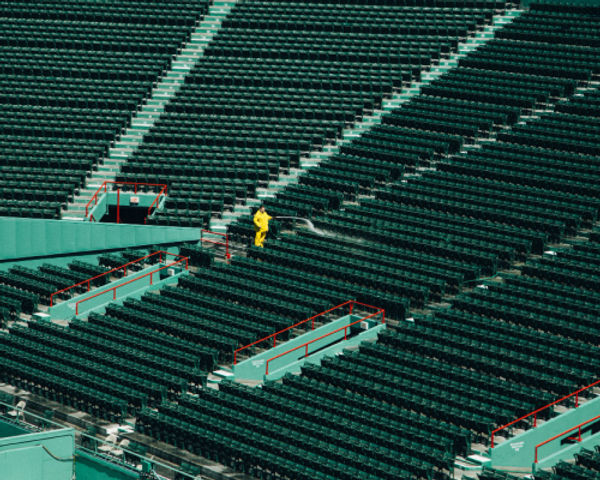
Nfl Stadium Designers Battle To Win $3B Chiefs Project
Front Office Sports
28 January 2026
stadium

New Stadium Project In Novi Sad Secures Location Permit, Setting New Standards For Sports Infrastructure In Southeast Europe
Sports Venue Business
24 January 2026
stadium
Washington Commanders Unveil Renderings Of New World-Class Stadium
Stadia Magazine
23 January 2026
stadium
Tampa Bay Rays Take Major Step Towards New Mlb Stadium
Stadia Magazine
23 January 2026
stadium
Rays Stadium Saga Clears Hurdle Toward New Tampa Development
Front Office Sports
22 January 2026
stadium