railwayrailway
Hungary Prepares To Upgrade 1,000 Km Of Railway
By Railway Pro•12-07-2025December 07, 2025•2 min
 railway
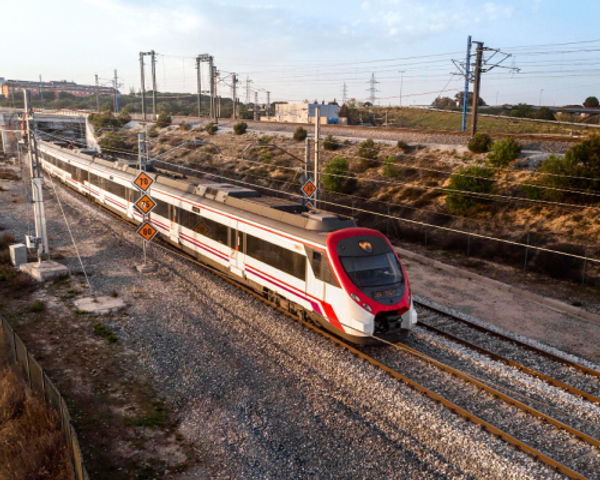
Hungary has announced a comprehensive plan to modernize its railway infrastructure, which includes the rehabilitation of 1,000 km of railway over the next few years.
Funding has already been secured in full, confirmed Minister of Construction and Transport János Lázár before the Parliament’s Economic Committee. The plan marks one of the largest coordinated investments in railway infrastructure in Central Europe and reflects a long-term strategic vision with clear objectives for economic growth and regional competitiveness.
The Hungarian railway network totals 8,000 km, of which 6,000 km are operational. Since 2010, Hungary has completed 103 railway projects worth HUF 2.091 billion (approximately EUR 5.4 billion), which has enabled the upgrade of 1,800 km of railway.
New works — another 1,000 km — are to be carried out, and Lázár said that all the funding is already available, including through European Investment Bank credit instruments, designed to compensate for European funds that are still blocked.
Lázár emphasized that large railway investments involve a development cycle of about eight years — a period that Budapest explicitly integrates into public planning.
In addition, the minister warned that in the next EU financial year, funding for rail and road projects may no longer be available if they are not partially classified as investments with military relevance. Such a reclassification, permitted by European regulations, would allow access to additional funds from extra-budgetary sources.
This approach shows not only financial pragmatism, but also that Hungary treats its rail infrastructure as a strategic asset essential to its regional positioning.
The minister also reported significant operational results:
Hungary also offers one of the cheapest public transport systems in the EU.
At the same time, Budapest is rolling out a major investment package around Liszt Ferenc Airport, worth €2.5 billion, by 2035. This includes:
This type of integrated investment — rail + airport + road — is rare in Central Europe and illustrates Hungary’s strategic focus on increasing its economic and logistical attractiveness.
Lázár stated that the Hungarian state is seeking to gain a strategic advantage by strengthening corridors to the West:
“If the western routes pass through here, Hungary gains a position of influence, and the GDP-generating capacity of the inland regions can increase significantly.”
This positioning clearly shows how Budapest views rail infrastructure: not just as a technical project, but as an element of economic and geopolitical policy.
Recent Comments
0
Loading related news…