railwayrailway
Systra–Db Jv Wins Key Consultancy Contract For Mumbai–Ahmedabad Bullet Train Systems
By Rail Analysis•03-11-2026March 11, 2026•4 min
Rail Analysis•03-11-2026March 11, 2026•4 min railway
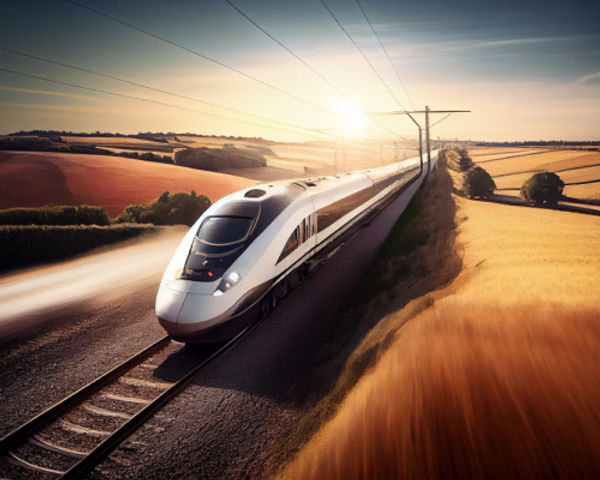
SYSTRA and DB Engineering & Consulting have secured a consultancy contract to manage critical railway systems for the Mumbai–Ahmedabad high-speed rail corridor. The 508-km bullet train route will introduce trains capable of reaching speeds of up to 320 km/h. Once operational, the line will cut travel time from nearly six hours to just over two hours, marking a major technological leap for India’s rail infrastructure.
Introduction:
India’s ambitious high-speed rail project connecting Mumbai and Ahmedabad has taken a major step forward with the signing of a key consultancy contract. The National High Speed Rail Corporation Ltd (NHSRCL) has appointed a joint venture between SYSTRA and DB Engineering & Consulting to provide Project Management Consultancy (PMC) services for critical systems of the corridor.
The agreement covers the deployment and management of advanced railway systems including signalling and telecommunication, SCADA control systems, and ticketing technology for the country’s first high-speed rail line. The project represents a transformative step for India’s railway infrastructure and aims to redefine long-distance travel between two of the nation’s most important economic centres.
A Landmark 508-Kilometre High-Speed Corridor:
The Mumbai–Ahmedabad High-Speed Rail (MAHSR) corridor will stretch across 508 kilometres, linking major cities and business hubs in Maharashtra and Gujarat.
The route will pass through diverse and challenging terrain, including:
The subsea tunnel is expected to be a major engineering milestone, showcasing the advanced technological capabilities required to construct the country’s first bullet train route.
Faster Travel Between Two Major Cities:
One of the biggest advantages of the project will be a dramatic reduction in travel time.
Currently, travelling between Mumbai and Ahmedabad by train can take around six hours. Once the high-speed rail becomes operational, passengers will be able to complete the journey in approximately two hours and seven minutes.
Key speed highlights include:
The high-speed line is expected to provide a faster, more reliable, and comfortable alternative to conventional rail and road travel.
Role of SYSTRA and DB Engineering & Consulting:
Under the new contract, the SYSTRA–DB Engineering & Consulting joint venture will act as Systems Project Management Consultant for the corridor.
Their responsibilities will include:
These systems play a crucial role in maintaining safety, reliability, and efficient operations on a high-speed rail network.
The teams will also coordinate closely with the DRA Infracon–Siemens joint venture, which will be responsible for supplying system equipment for the railway line.
Insight:
Shri Hari Somalraju, Managing Director SYSTRA India, said, “This contract reinforces SYSTRA’s status as a global leader in high-speed rail engineering. With references around the world and involvement in the design of one in two high-speed rail lines, we have all the expertise required to complete India’s first high-speed rail line between Mumbai and Ahmedabad. We are proud to contribute to this major project for the development of India, where we have been established for nearly 70 years.”
Strengthening Global Expertise in High-Speed Rail:
The contract also highlights the global expertise of both participating companies.
SYSTRA has extensive experience in high-speed rail engineering and has contributed to the design of one in every two high-speed rail lines worldwide. The company has also maintained a strong presence in India for nearly 70 years, participating in several major transportation projects.
Similarly, DB Engineering & Consulting brings global knowledge in rail system integration, project supervision, and railway operations. The partnership is expected to ensure the delivery of high-performance and future-ready railway systems for India’s first bullet train.
India’s Larger High-Speed Rail Vision:
The Mumbai–Ahmedabad corridor is only the beginning of India’s larger high-speed rail expansion plan.
The government is planning seven high-speed rail corridors, which together could cover over 4,000 kilometres across the country. These projects aim to modernise rail travel, support economic growth, and strengthen connectivity between major metropolitan regions.
The introduction of high-speed trains is also expected to promote sustainable mobility, reducing congestion on roads and lowering environmental impacts compared to other transport modes.
Conclusion:
The Mumbai–Ahmedabad bullet train project marks a defining moment in India’s railway modernization journey. With advanced systems, international expertise, and cutting-edge engineering such as the country’s first undersea tunnel, the corridor promises to transform intercity travel and lay the foundation for India’s future high-speed rail network.
Source: SYSTRA – Press Release | Image Credit: NHSRCL
Timely insights, straight to your WhatsApp—stay updated with ease!
Stay connected to the rail industry—timely news, straight to Telegram!
Recent Comments
0
Loading related news…