railwayrailway
Transport Secretary Announces New Delivery Timeframes And Costs For Hs2
By Rail Business Daily•05-20-2026May 20, 2026•11 min
Rail Business Daily•05-20-2026May 20, 2026•11 min railway
The Transport Secretary has declared an end to an “era of neglect” on HS2 as she set out plans to reset the project, delivering the railway as quickly as possible and at the lowest reasonable cost.
Following years of issues, the Transport Secretary has convened the team that delivered the Elizabeth Line and set out new costs and timeframes for the project, including efforts to cut construction costs and get passengers on trains sooner.
The Government announced on Tuesday the project is now expected to cost between £87.7 and £102.7 billion, with two thirds of the increase due to works being missed from the scope of the original project plan, underestimation by previous Governments, inefficient delivery – and the remaining third due to inflation.
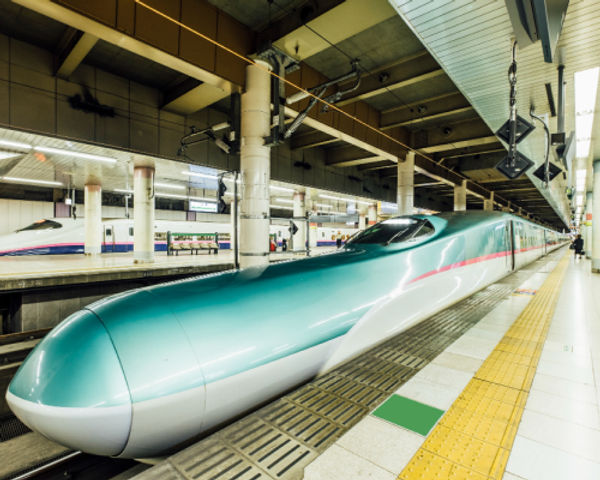
The Government has also confirmed HS2 will run at 320km/h (200mph), aligning with speeds across Europe and Japanese bullet trains. In previous plans, HS2 trains were set to run at 360km/h (225mph) but the Government says with no existing track to test trains at that speed in Great Britain, adding to spiralling costs and build time.
The change in speed could deliver savings of up to £2.5bn and at least a year in delivery time, so communities can start to benefit sooner.
The first trains are now expected to start between Old Oak Common in west London and Birmingham Curzon Street between 2036 and 2039. An estimate of the full scheme from London Euston to Curzon Street and a connection to the West Coast Main Line, is between 2040 and 2043.
HS2 Ltd CEO Mark Wild’s ongoing reset has already borne fruit – with six major construction milestones reached earlier than planned in the last year – as well as eliminating 300 bureaucratic roles, and scrutinising contracts to ensure taxpayers get value for money.
The Government is committed to delivering HS2 in full between Birmingham and London, with a new assessment revealing it could cost as much to cancel the project as it would to complete it, while delivering none of the benefits.
The Transport Secretary said: “Taxpayers, passengers and communities along the route have been let down by years of mismanagement on HS2.
“I share their anger about the waste and mess, but I am proud that this Government has worked with HS2’s new senior team to get this project off life support and on the road to recovery.
“We will get the job done but we will also take every opportunity to save time and money in the process, getting a grip on delivery, controlling costs, and stripping out the complexity that’s plagued the project in the past.
“We can and must build big infrastructure projects in Britain. But we also need competent people in charge of them. This is the same team that delivered the Elizabeth Line. We have done it before, we will do it again.”
Delivering HS2 will mean more trains on the West Coast Main Line corridor, and more reliable and faster journeys, saving passengers around 30 minutes between London and Birmingham compared with current services, and doubling peak long-distance, fast rail capacity between the capital and West Midlands.
The new ranges come as the Government publishes in full a comprehensive report by Sir Stephen Lovegrove into the Civil Service’s role in HS2’s execution to date. The Government will respond to Sir Stephen’s recommendations after thorough consideration of the findings.
HS2 will deliver houses, jobs and growth. Recent forecasts show it is already contributing £20 billion to the economy over the next decade around its station sites and depot in the West Midlands and west London, plus 63,000 new homes and over 49,000 new jobs in these areas.
Commercial development at Euston is estimated to add £41 billion to the economy over the next three decades and support 34,000 new jobs, with high-tech tunnelling machines now underway to make HS2 to Euston a reality. Over 6,100 contracts have been awarded to UK businesses, with more than half of these to small and medium-size enterprises.
CEO Mark Wild and Chair Mike Brown have started to turn HS2 Ltd around and have delivered six major construction milestones ahead of schedule over the last 12 months, including:
-the sliding of a road bridge for the A46 over the HS2 line of route in April 2025;
-the installation of beams and overbridges near Calvert in Buckinghamshire in August 2025;
-the completion of boring the 3.5-mile Bromford tunnel in Birmingham in October 2025. Mark Wild, Chief Executive of HS2 Ltd, said: “I recognise this will be unwelcome news for local communities and taxpayers, and I share in their disappointment that it will take longer and cost more to bring HS2 into service. “Resetting HS2 was the only way to regain control of the project. We have turned a corner in the last 12 months with significantly improved levels of productivity, helping us to deliver major milestones ahead of schedule. We’re also progressing with plans to bring HS2 into line with other high-speed railways in Europe – further reducing the project’s complexity without compromising on benefits. “Better journeys, more capacity on the network, and economic growth are all vital to the country’s future prosperity, and that’s exactly what we will deliver. Driven by the hard work of 31,000 people on the ground, HS2 is finally getting back on track.” The HS2 reset is fully funded within the Department for Transport’s current Spending Review settlement, with no additional borrowing. Funding beyond 2029-30 will be set at future Spending Reviews and will be underpinned by the Government’s non-negotiable fiscal rules. Railway Industry Association (RIA) Chief Executive Darren Caplan said: “The Railway Industry Association welcomes the clarity on the budget and schedule for the construction of HS2 announced today by Transport Secretary Heidi Alexander. It is hugely important that decisions on line speed and cost have now been agreed, and of course lessons need to be learned as the scheme moves forward to delivery in the months and years ahead.“This new line is one of the most important infrastructure projects in the UK, in terms of delivering economic growth, jobs and housing, as well as ensuring there is crucial new rail capacity on the currently congested West Coast Main Line. Completion of the route must now be the priority, as well as confirmation on how HS2 will integrate into the existing network, as the railway industry moves towards the establishment of Great British Railways next year.” A spokesperson from the High Speed Rail Group comments: “Certainty and clear direction is what HS2 has long needed, and this announcement of a new cost and schedule provides a path forward against which HS2 Ltd, industry and Government can work together to deliver for the country.The challenges that have affected HS2 to date are now well understood across government, delivery bodies and the wider supply chain. There is a shared responsibility for all parties to learn from them. It is also essential that the lessons learned are now applied collectively to the current and future infrastructure projects, providing the stability and continuity needed for industry partners to deliver effectively.“HS2 remains a project of enormous national importance. It is supporting over 30,000 jobs, sustaining highly skilled workers and apprenticeships, and supporting SMEs and supply chains across all regions of the UK. It is vital that we retain these skills and capabilities so they continue to deliver long term value for the UK. The bridges, viaducts and tunnels delivered so far are also a testament to our nation’s continued engineering excellence.“Beyond construction, HS2 will provide lasting economic and transport benefits through increased passenger and freight capacity, improved regional connectivity, regeneration opportunities and broader economic growth. “As construction continues and despite setbacks to the delivery timeline, these benefits are already materialising. In Birmingham, there has been a significant increase in regeneration and investment activity close to the two HS2 stations, Birmingham Curzon Street and Interchange, while at Old Oak Common in London, construction is progressing at pace. The project is expected to generate an estimated £10 billion economic uplift across West London over the next decade.“HS2 should be the spine of a modern, integrated national railway that connects communities North, South, East and West. However, the success of HS2 depends not only on what is already being built, but on how it connects into the wider network. Without a credible plan for the connection to Crewe and beyond, there is a real risk the wider economic and capacity benefits the line was designed to deliver will not be unlocked.“With this reset, a line can start to be drawn under years of uncertainty. The priority now is for industry, Government and HS2 Ltd to work together to deliver HS2 within its revised scope, whilst developing a clear plan for how the new railway connects to the existing network further north.”
John O’Connell of the TaxPayers’ Alliance, said: “Taxpayers will be disgusted at the way they have been swindled to pay for this white elephant.
“HS2 has become a monument to government waste, spiralling costs and catastrophic mismanagement on an industrial scale.
“If this government had any sense, they would finally draw a line under this fiasco and consign HS2 to the dustbin of history where it belongs. “
Liberal Democrat Transport Spokesperson, Olly Glover MP, said: “The massive cost and timescale escalations of HS2, one of the most expensive civil engineering projects in human history, are a national embarrassment.
“Yet there is no question we still need long-distance rail capacity, so we can make better use of existing lines, for freight and regional trains.
“The previous Conservative Government’s shocking mismanagement of HS2 has resulted in years of delays and billions of pounds of taxpayers’ money being poured down the drain.
“It’s time we learnt from and embraced the good practice and wisdom of allies such as France, who have been building high speed lines for decades, at costs per mile at least 90 per cent lower than HS2’s.”
TSSA General Secretary, Maryam Eslamdoust said – “After too many wasted years under the Conservatives we now seem to have some clarity about the future of HS2. That is welcome – but going forward we need full and determined backing from the government to ensure HS2 becomes a reality and not just a pipe dream.
“We have already seen far too many delays to HS2 – all of which are unacceptable because this is a project which is vital not only to the rail industry but the British economy as a whole.
“We urgently need to see greater connectivity at local, regional and national levels – the UK is already far behind other major economies around the world when it comes to high-speed rail.
“What we are seeing is the impact of all the political flip-flopping on HS2 down the years. The public and the workforce at HS2 deserve so much better. Completing HS2 and connecting it with Northern Powerhouse Rail will revitalise train travel, which is the only clean, green mass transport system we have.”
Dr David Crosthwaite, chief economist, BCIS, said: “The Transport Secretary’s HS2 update is a sad indictment of our ability to deliver major infrastructure in the UK.
“HS2 is now forecast to cost up to £102bn at 2025 prices and may not be operational until 2039. That is more than double the original estimate of £32bn at 2011 prices, equivalent to around £49bn at 2025 prices, and that original estimate included the northern sections that have since been cancelled.
“Construction only began in 2020, meaning the original budget has already been exceeded within six years, despite the railway still being many years from completion.
“Particularly concerning is the finding that around one-third of the cost overrun has been attributed to inflation, with HS2 Ltd criticised for not updating inflation estimates frequently enough. On projects spanning decades, regularly rebasing cost forecasts and stress-testing them against changing market conditions should be fundamental.
“Delays also increase exposure to rising labour, materials and financing costs, compounding the financial impact over time.
“There are serious concerns over whether the revised budget can realistically hold over the next 14 years and given the pace of technological change, there is also uncertainty over whether a project conceived decades ago will still represent the best solution by the time it opens.
“Once delivered, HS2 will have been around thirty years in the making. Let’s hope that it’s not out of date by the time the first trains start running.”
The latest HS2 report to Parliament, published, can be found here.
Recent Comments
0
Loading related news…